
Technology Development
Our research has a long-standing history of developing or refining new computational and or experimental solutions to identify new functionalities in the human genome. Computationally, we have developed sol...
Read More...Non-coding RNA refers to RNA molecules that do not code for proteins but play important roles in regulating gene expression and cellular processes. The John Rinn Lab focuses on long noncoding RNAs (lncRNAs), a class of these RNA molecules with vast potential to influence human health and disease. Our research aims to decode how lncRNAs function, interact with and regulate the genome, and organize the cell nucleus. We use both computational and experimental methods to reveal the hidden regulatory roles of these lncRNAs.
Our approach combines genomic mapping, genetic models, and molecular analysis to uncover new functions for lncRNAs. We focus on understanding the non-coding RNA capabilities that shape nuclear structure and regulate gene expression. By investigating the genome’s “dark regions,” or the “dark genome” we seek to shed light on the lncRNAs with the most impact on biological systems. This work uncovers layers of regulation that traditional gene studies often miss.
About Our Research on Non-Coding RNA Capabilities
Our lab investigates how lncRNAs influence chromatin organization and gene expression. DNA must fit into the cell nucleus in an organized way to control cell function. Many lncRNAs act as molecular architects by shaping this organization and in turn which genes are on or off. We also apply advanced single-molecule imaging and biochemical methods to track these RNAs within the nucleus and understand their spatial roles. This insight helps explain how gene activity adapts to cell type and state.
Genetic experiments form another key part of our research. By deleting or modifying lncRNA genes in model organisms, we observe how their loss affects development and physiology. These genetic models test the real-world significance of lncRNAs. Our lab also explores ncRNA sequence features that govern function using high-throughput assays. Together, these tools advance our understanding of the molecular grammar that lncRNAs use to regulate biology. Currently, we are developing a foundational model towards the first ever RNA-langue model – or ChatGPT for RNA. We envision a future where a disease of interest is a “prompt” and the output ChatGPT-RNA is the RNA sequence(s) that could restore gene circuits broken in that disease back to a healthy state.
Where Discovery Meets Innovation
Our research pushes the boundaries of RNA science with new technologies and approaches. We develop experimental techniques such as CLING-FISH and CRISPR-Display to visualize and manipulate lncRNA in living cells. These tools help us observe how lncRNAs guide chromosome folding and gene regulation over time. Our computational methods analyze large datasets from RNA sequencing and chromatin interaction studies. This combination reveals complex networks of RNA-based regulation.
We focus on understanding how lncRNAs act within nuclear domains. These domains organize the genome into functional units, and lncRNAs play key roles in their maintenance. Our work demonstrates that disrupting lncRNA function can alter genome architecture and gene expression patterns. This insight opens new possibilities for understanding diseases linked to nuclear organization defects.
The lab also investigates the “language” of lncRNAs by decoding RNA sequence and structure features. Using massively parallel RNA assays, we test thousands of RNA sequences to identify functional elements. This approach helps translate RNA “hieroglyphics” into understandable rules that predict lncRNA roles. These advances contribute to the emerging field of RNA therapeutics and biotechnology.
Why Choose Rinn Lab?
We combine world-class research with a collaborative environment. Our team integrates diverse scientific backgrounds to solve complex questions about genome regulation. We balance experimental work with computational analysis to share a complete view of lncRNA biology. This integrated approach allows us to uncover novel RNA functions that others may overlook.
We support open science and education by making our data, tools, and courses freely available. Our commitment to training empowers students and researchers to join the field of RNA biology. We foster diversity in our team, welcoming people from various disciplines and experiences. This inclusivity strengthens our research and innovation.
Contact us to find out more about our research on non-coding RNA capabilities. Be a part of the future of RNA science today!
Our research has a long-standing history of developing or refining new computational and or experimental solutions to identify new functionalities in the human genome. Computationally, we have developed sol...
Read More...
"The laws of genetics have never depended upon knowing what the genes are chemically and would hold true even if they were made of green cheese" - Ed Lewis The ultimate demonstration of the functional contributi...
Read More...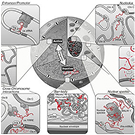
Remarkably, 2m of linear DNA must be packaged into to the small confines of the nucleus. To ensure proper cell state, each cell must organize its DNA, RNA, and proteins within the nucleus in ways that differ in ...
Read More...
For more than a decade, we have had a hobby of "gene-hunting" for new genes in the human and mouse genomes (genomic cartography). Specifically, we aim to identify members of a new(er) class of genes termed ...
Read More...
For protein-coding genes we know the letters (amino acids), words (domains) and sentences (structures). Thus, to near fluency, we can read a sequence and make some inference of function for a given protein. ...
Read More...
Our laboratory is built upon a team of scientists with diverse backgrounds, expertise and interests. We train to seamlessly bridge the experimental, computational and statistical sciences towards decoding the hu...
Read More...